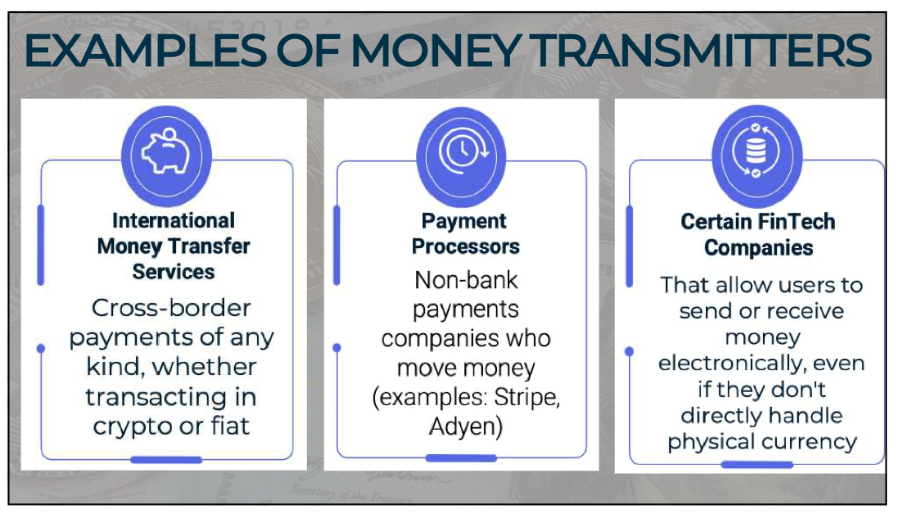
The most significant legal issues for money transmission businesses involve navigating a complex regulatory landscape that includes strict federal and state licensing requirements, robust anti-money laundering (AML) protocols, and extensive reporting and record-keeping obligations. Failure to comply can result in severe civil and criminal penalties. This CLE course explores the regulatory requirements imposed by the FinCEN and state regulators, using real-world enforcement actions — such as those involving Coinstar, Ripple Labs, Sigue Corporation, and Block Inc. — to highlight the legal and financial risks of non-compliance.
This CLE explores the ethical, practical and regulatory implications of integrating artificial intelligence into legal practice. It covers core technologies like machine learning and generative AI, their application in law firms and the ethical responsibilities attorneys under the ABA Model Rules and various state bar ethics opinions.
What is the South Carolina CLE Requirement? The Supreme Courst of South Carolina adopted the mandatory continuing legal education (MCLE) program in 1982. South Carolina rules require all active South Carolina attorneys to complete a minimum of 14 credit hours. At least 2 of these hours must focus on Legal Ethics and Professional Responsibility (LEPR). Every 2 reporting years, attorneys must also…
Continuing Legal Education Requirement (CLER) Florida attorneys are required to complete their Florida Continuing Legal Education Requirement (CLER) which is a minimum of 30 total credit hours during their three-year compliance cycle. At least 3 of the 30 hours must be in technology. At least 3 of the 30 hours must be in either ethics, professionalism, substance abuse, or mental health and…
All Texas attorneys are required to complete a minimum of 15 accredited CLE hours each compliance cycle. Texas has a 1-year CLE compliance cycle, so that means you need to complete your CLE each year. Your compliance deadline is the last day of the month preceding your birth month and your reporting deadline is the last day of your birth month. Attorney…
For 20 years Attorney Credits has continually evolved our website and courses to make sure that taking your continuing legal education (CLE) is as easy as possible, and that the content of the courses is the best that we can deliver. Course Excellence Attorney Credits has refined our courses based on user feedback over the last two decades. We evaluate each course…
Pennsylvania has three annual CLE deadlines, April 30, August 31, and December 31. If you are in compliance group 2, your CLE deadline is only two weeks away. Compliance group 1 has a April 30 CLE deadline and compliance group 3 has a December 31 CLE deadline. Pennsylvania requires a minimum of 12 CLE credits each year, of which a minimum of…
When it comes to reporting completed continuing legal education (CLE) courses to the states, there are two main differences. There are self-reporting states where attorneys must self-report and there are provider reporting states. In this short blog about CLE reporting, we are going to cover what states Attorney Credits reports to and how frequently we report. Reporting questions are one of the…
In this CLE, Cari Sheehan will detail the ethical issues associated with using social media & TikTok and review some attorney influencer videos to see if their online conduct truly comports with the Rules of Professional Conduct. Main topics covered: attorney advertising in a TikTok world, how artificial intelligence can help attorney advertising and ethical rules implicated in advertising on social media platforms.
We won’t spill the beans – we know you want your attorneys billing every possible hour, and that CLE is just time wasted that they could be billing! In all seriousness, CLE is an important aspect of continued learning that only enhances your attorney’s knowledge. However, they shouldn’t be wasting time looking for CLE or paying too much. Instead, your law firm…